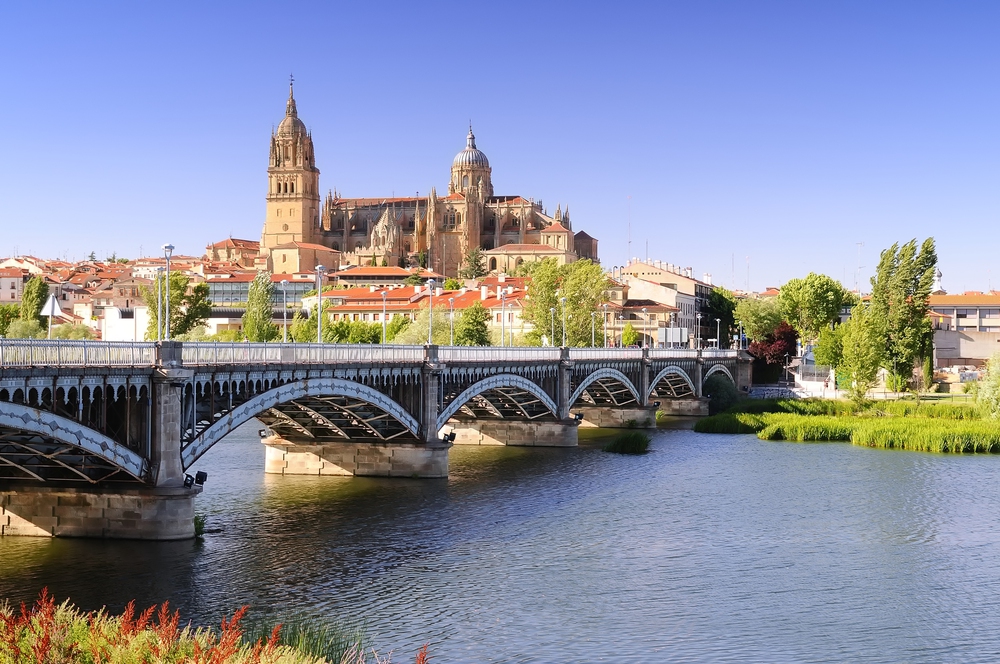
Salamanca Spain is a historic city in Spain, located in the region of Castilla y León.
Known for its stunning architecture and vibrant culture, it has been a centre of learning for centuries.
The city is home to one of the oldest universities in the world, attracting students from across the globe.
With its rich heritage and numerous landmarks, Salamanca Spain offers a unique glimpse into Spain’s past.

Before we start… Yours Free
Please click / tap on the image below:

Exploring the History of Salamanca Spain
Salamanca’s history is a captivating tapestry woven with ancient influences, medieval development, and significant events that shaped its identity.
This section delves into the various epochs that have contributed to the city’s enduring legacy.
Ancient Origins and Influences
The origins of Salamanca Spain can be traced back over 2,700 years, with evidence of early settlements during the Iron Age.
The region was initially inhabited by the Vettones, a Celtic tribe known for their distinctive rock carvings and communal living.
With the arrival of the Romans, Salamanca, known then as ‘Helmantica,’ began to flourish.
This period marked the construction of essential infrastructures, including roads, forums, and bridges, many of which can still be appreciated today.
Roman influence is evident in the remnants of their architectural legacy, which fuse with local traditions.
The prosperity of this era laid the groundwork for the city’s cultural and economic life, establishing Salamanca as a significant hub in the region.
Archaeological findings, including coins and pottery, have helped historians piece together the rich narrative of these ancient times.
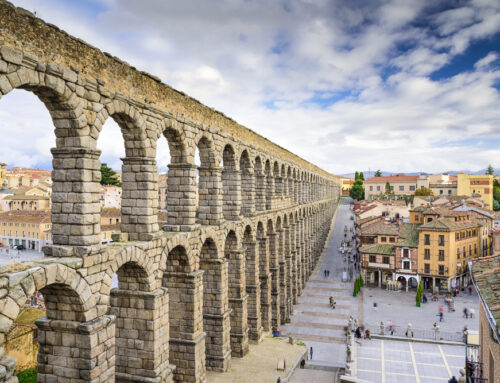
When you visit Segovia Spain, you will be able to the see the spectacular Roman Aqueduct.
Medieval Growth and Development
The medieval period in Salamanca Spain was characterised by notable growth, particularly following the repopulation efforts led by Raimundo de Borgoña in the 11th century.
This era saw the establishment of the University of Salamanca in 1218, which quickly became one of the preeminent centres of learning in Europe.
The university attracted scholars and students from across the continent, cementing Salamanca’s reputation as a beacon of education and intellectual discourse.
During the 13th to the 15th centuries, the city experienced significant architectural expansion.
The construction of grand cathedrals and palaces reflected the wealth and power of its citizens.
This period also marked a cultural revival, as Salamanca played a pivotal role in the flourishing of arts and literature, contributing to Spain’s cultural renaissance.
Role During the Spanish Civil War
The Spanish Civil War (1936-1939) left an indelible mark on Salamanca’s history.
At the onset of the conflict, the city was a strategic location for the Nationalist forces.
It became a key command centre where military strategies were devised.
The university itself faced turmoil, as ideological divides influenced education and research.
During this tumultuous time, many scholars and intellectuals fled Spain, leading to a significant brain drain.
However, Salamanca’s cultural identity persisted despite the war’s destruction.
The resilience of its people and the restoration efforts that followed the conflict laid the groundwork for the city’s future revival and growth.
Today, the echoes of this period remain integral to understanding the full scope of Salamanca’s rich history.
Architectural Heritage of Salamanca
The architectural heritage of Salamanca Spain is a testament to its rich and varied history, as every city in the region of Castilla y León, including Soria Spain.
The city boasts an array of stunning buildings that reflect its cultural significance and artistic evolution over the centuries.
The Old Cathedral and New Cathedral
The twin cathedrals of Salamanca Spain are iconic landmarks, showcasing distinct architectural styles that span centuries.
The Romanesque Charm of the Old Cathedral
The Old Cathedral, constructed in the 12th century, exhibits the Romanesque architectural style.
Its robust stone construction and simple yet elegant lines capture the essence of medieval architecture.
Visitors are drawn to its intricately carved capitals and beautiful apse, which contribute to its spiritual ambience.
The interior features stunning murals that depict biblical scenes, further enhancing its historical significance.
A noteworthy aspect of the Old Cathedral is the bell tower, which offers panoramic views of the city and its surroundings.
Gothic Masterpiece: The New Cathedral
The New Cathedral, on the other hand, represents the evolution of architectural styles into the Gothic realm, completed in the 18th century.
With its soaring spires and intricate façade, it stands as a remarkable example of late Gothic art.
Inside, the high ceilings and detailed stained glass windows create a magnificent atmosphere.
The New Cathedral houses an array of chapels adorned with exquisite sculptures and paintings, showcasing the artistry of its time.
One of its distinguishing features is the unique combination of Gothic and Baroque elements, symbolising the city’s rich artistic heritage.
Iconic Buildings and Landmarks
Besides the cathedrals, Salamanca is home to several iconic buildings and landmarks that have shaped its landscape.
The Roman Bridge and Torre del Clavero
The Roman Bridge, or Puente Romano, is a striking structure that dates back to the 1st century AD.
This bridge exemplifies Roman engineering, featuring 26 arches that span the Tormes River.
It serves as a vital connection between the city and its historical roots.
The views from the bridge are breathtaking, especially at sunset, where the reflections on the water create a picturesque scene.
Another notable landmark is the Torre del Clavero, a distinguished tower that showcases late medieval architecture.
Originally built in the 15th century, it served as a defensive structure and is a fine example of the local stonework.
The tower is an engaging sight with its unique design and rich history, drawing the interest of both tourists and locals alike.
World Heritage Sites: Why It Matters
The designation of Salamanca as a UNESCO World Heritage Site in 1988 highlights its significance as a cultural and architectural treasure.
This recognition underscores the need for preservation and protection of its invaluable heritage.
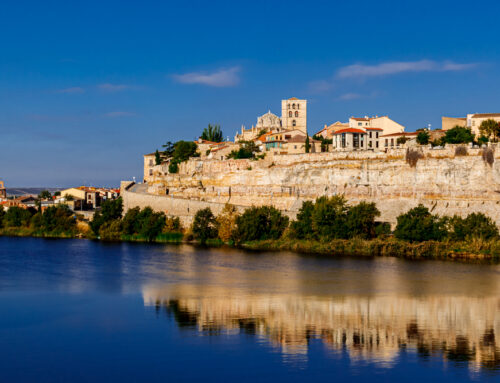
The collection of buildings, plazas, and historical sites within the city reflects the confluence of various cultures and artistic movements over the centuries, as in Zamora Spain.
Being a World Heritage Site not only attracts visitors from across the globe but also fosters a deeper appreciation for the cultural legacy that Salamanca Spain represents.
This status enhances the city’s appeal as a centre of learning and tradition, ensuring that its architectural marvels are preserved for future generations to explore and admire.
The University of Salamanca
The University of Salamanca stands as a pivotal institution of higher learning, renowned for its historical significance and scholarly contributions.
Established in 1218, it is not only Spain’s oldest university but also one of the most prestigious in Europe, attracting scholars and students from across the globe.
Historical Significance and Notable Alumni
The historical importance of the University of Salamanca Spain is unmatched.
It was officially recognised as a university in 1218, making it one of the first in Europe.
Over the centuries, it has played a crucial role in shaping academic thought and serves as a key institution in the development of various disciplines.
Notable alumni include influential figures such as:
- Antonio de Nebrija: A prominent humanist and linguist known for publishing the first grammar of a modern European language.
- Miguel de Unamuno: A philosopher and writer who significantly impacted Spanish literature and thought.
- Christopher Columbus: He consulted with scholars there prior to his voyages that led to the discovery of the Americas.
The university’s rich history is evident in its expansive libraries and archives, which house invaluable manuscripts and texts, many of which contributed to the European Renaissance.
Modern Education and International Appeal
Today, the University of Salamanca Spain continues to uphold its legacy by offering a diverse range of undergraduate and postgraduate programmes across various fields.
Its emphasis on quality education and research remains steadfast.
The institution attracts a significant number of international students, making it a multicultural hub.
The University has developed a reputation for excellence in:
- Language studies, particularly Spanish as a foreign language.
- Humanities and Social Sciences.
- Natural Sciences and Engineering.
This appeal is complemented by various exchange programmes and partnerships with universities worldwide, enhancing its global presence.
Architectural Marvels: The Main Building
The university’s main building is an architectural treasure, showcasing the art of the Plateresque style, which flourished during the Spanish Renaissance.
Its intricate facade is adorned with numerous sculptures and reliefs representing various academic and religious figures.
Key features of the main building include:
- The façade: A stunning example of Plateresque architecture, it reflects the university’s historical wealth and artistic brilliance.
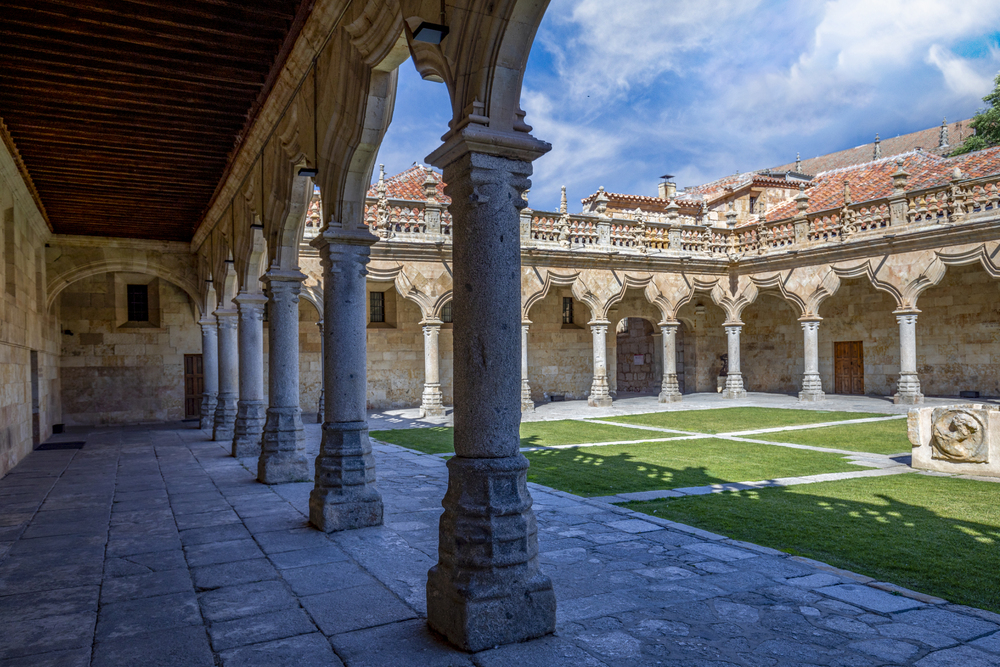
- The Patio de las Escuelas: A beautiful courtyard that serves as a gathering place for students and a venue for cultural events.
- The historic library: An architectural gem that preserves centuries of knowledge and serves as a resource for current students and scholars.
This blend of historical significance and architectural beauty makes the University of Salamanca Spain not just an educational institution but also a vital part of the city’s cultural landscape.
Cultural Landscape of Salamanca
The cultural landscape of Salamanca is a vibrant tapestry woven from its rich heritage, artistic expressions, and the dynamic traditions that characterise the city.
With a unique blend of historical influences and modern creativity, Salamanca offers a distinctive cultural experience.
In the regional context, cities like Valladolid Spain, also contribute to the cultural richness of Castile and León, with an intense artistic life and a remarkable historical heritage.
Art Nouveau Influences and Artistic Treasures
The influence of Art Nouveau can be felt throughout Salamanca Spain, especially in various public buildings and private residences.
This movement introduced a wave of creativity that transformed ordinary structures into remarkable artistic expressions.
- The Casa de las Conchas is one such example. Its façade, adorned with shells, combines Gothic and Plateresque styles, showcasing decorative artistry typical of the period.
- Many buildings exhibit intricate wrought-iron details and elegant curves that reflect the ethos of the Art Nouveau movement, creating an enchanting atmosphere across the city.
- Artistic treasures can also be found in local galleries displaying works by contemporary artists, bridging the gap between the old and the new.
Vibrant Festivals and Traditions
Salamanca hosts a plethora of festivals that capture the essence of its cultural identity, celebrating its historical and religious significance.
These events provide insight into the community’s values and liveliness.
- The Semana Santa, or Holy Week, is one of the most significant celebrations, marked by solemn processions and the heartfelt participation of locals.
- In September, the Fiesta de Santa Clara is held, blending religious devotion with jubilant festivities, while attracting visitors from across the region.
- The Ferias y Fiestas de la Virgen de la Vega are another highlight, featuring traditional music, dance, and gastronomy, reinforcing the city’s communal spirit.
Influence of the Spanish Language
The city’s renowned university has historically been a focal point for the Spanish language, attracting students from around the world.
The rich linguistic tradition permeates daily life in Salamanca Spain, enhancing its cultural offerings.
- Salamanca is considered one of the best places to learn Spanish due to its clear pronunciation and the variety of language schools available.
- The city’s vibrant atmosphere fosters a deep appreciation for the language, making it a living part of the cultural experience.
- Events such as literary festivals and poetry readings further highlight the importance of language in the cultural landscape, promoting literary expression among both residents and visitors.
Salamanca’s Weather and Geography
Salamanca’s climate and geographical features offer a unique context for its cultural and historical landscape, as Leon Spain.
The city experiences distinct seasonal changes, influenced by its location in the western part of Spain.
In contrast, the city of Palencia Spain also has a similar continental climate, although with slight variations in temperature and rainfall due to its more northerly position.
Typical Weather Patterns Throughout the Year
Salamanca Spain has a continental climate, which is characterised by hot summers and cold winters. This variation creates a diverse atmosphere for residents and visitors alike.
- Spring (March to May):
Spring brings mild temperatures, averaging between 10°C and 20°C. The blossoms around the city create a picturesque environment, making it a lovely time for outdoor activities.
- Summer (June to August):
Summers can be quite hot, with daytime temperatures often exceeding 30°C. Nights tend to be cooler, providing a pleasant respite from the heat.
- Autumn (September to November):
In autumn, temperatures gradually decrease from around 20°C in September to a cool 10°C by November. The changing colours of the leaves add to the city’s charm.
- Winter (December to February):
Winters are cold, with temperatures frequently dropping below 0°C. Snowfall is rare but can occur, transforming the city into a winter wonderland.
Yours Free
Please click / tap on the image below:
The Tormes River and its Role in the City
The Tormes River is a significant geographical feature of Salamanca Spain.
It runs through the city, enhancing its charm and providing numerous recreational opportunities.
This river has played a crucial role in the city’s history and development.
It has served as a source of water, a means of transport, and a natural boundary throughout the ages.
The banks of the Tormes are lined with parks and pathways, creating a serene environment for strolls and leisure activities.
The river also hosts various events throughout the year. Festivals and celebrations often take place along its banks, further cementing its importance to local culture.
Accommodation: Hotels in Salamanca
Salamanca Spain offers a diverse range of accommodation options to suit the preferences and budgets of all travellers.
The city features everything from luxury hotels to more affordable places, making it easy to find a suitable stay while enjoying the vibrant atmosphere.
Finding the Best Hotel for Your Trip
Choosing the right hotel in Salamanca depends on individual needs and the purpose of the visit.
Those seeking a romantic getaway may prefer charming boutique hotels with character, while families might opt for larger establishments that provide additional amenities.
Considerations include location, comfort, and the type of experience desired.
- Evaluate hotel amenities: Look for hotels with features such as free Wi-Fi, breakfast options, or on-site dining.
- Check reviews: Websites providing customer feedback can help identify the quality and service of the hotels.
- Location: Proximity to key attractions like the University of Salamanca and the Plaza Mayor can enhance the travel experience.
- Budget: Set a budget to narrow down choices and consider the value offered by different establishments.
Luxury and Budget Options in the City Centre
The city centre houses various hotels that cater to both luxury seekers and budget-conscious travellers.
Here is a breakdown of some notable options.
Overall, finding the right place to stay in Salamanca Spain will enhance the overall travel experience.
The combination of history, culture, and modern conveniences ensures that every visitor can enjoy the city’s unique offerings.
Discovering Salamanca’s Plazas and Public Spaces
The vibrant plazas and public spaces of Salamanca echo the city’s rich cultural tapestry.
Each square serves as a focal point for social interaction and historical reflection.
The Plaza Mayor: Heart of the City
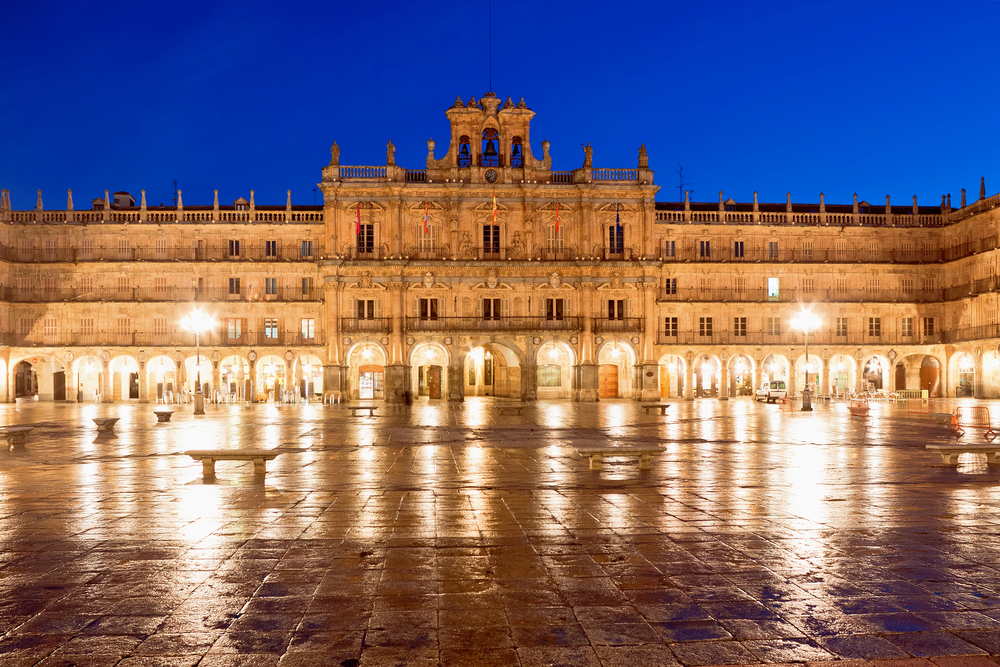
Regarded as one of Spain’s most beautiful squares, the Plaza Mayor is the beating heart of Salamanca.
It is a prime example of Baroque architecture, completed in the 18th century.
The structure boasts a harmonious design with elegant arches and intricate stonework that has withstood the test of time.
This grand square is a popular gathering spot for locals and visitors alike.
It is surrounded by numerous cafés and restaurants where people can savour traditional tapas while soaking in the lively atmosphere.
Various events are often held here, including concerts and festivals that celebrate the city’s rich heritage.
At night, the Plaza Mayor transforms into a magical space.
The warm glow of lights illuminates the stone facade, creating a stunning backdrop for evening strolls.
It is particularly vibrant during significant celebrations, where it plays an essential role in large public festivities.
Plaza del Corrillo and Other Notable Squares
Plaza del Corrillo is another prominent square in Salamanca Spain, famed for its charming ambiance and historic significance.
This lesser-known public space is nestled between traditional buildings, providing a picturesque setting for relaxation and socialising.
In Plaza del Corrillo, locals often gather for various events, markets, and performances.
The atmosphere is informal yet spirited, making it a delightful spot to witness daily life unfold.
Street performers, artisans, and local vendors frequently animate the square, reflecting the city’s artistic spirit.
Aside from these two squares, Salamanca is home to other noteworthy public spaces:
- Plaza de Anaya: Located near the university, this square is a favourite place for students, often bustling with activity.
- Plaza de la Libertad: Known for its tranquil atmosphere, this square features beautiful gardens and is ideal for a peaceful retreat.
- Plaza de San Benito: With historical significance dating back to medieval times, this square is surrounded by intriguing architecture and offers insight into Salamanca’s past.
These squares and public spaces enrich Salamanca’s urban landscape, creating opportunities for social interaction and cultural expression.
Each area contributes to the city’s unique fabric, ensuring visitors and residents alike can immerse themselves in its history and charm.
Experiencing Salamanca’s Gastronomy
The food scene in Salamanca Spain offers a delightful blend of traditional and contemporary flavours, reflecting the region’s rich cultural heritage.
Visitors will find a range of dishes that not only highlight local ingredients but also embody the city’s culinary elegance.
In the same region, Ávila Spain also stands out for its traditional gastronomy, especially for its hearty Castilian dishes that reflect its historical and rural character.
Traditional Dishes and Dining Experiences
Salamanca is renowned for its traditional cuisine, where each dish tells a story inspired by the local culture and history.
Diners can expect a variety of robust flavours, influenced by the surrounding agricultural landscape.
- Hornazo
This iconic meat pie is filled with a delightful mix of pork loin, chorizo, and hard-boiled eggs, encased in a golden, flaky crust.
It is traditionally enjoyed during festivities, particularly on Easter, and has become a symbol of local cuisine.
- Jamón Ibérico
Considered one of the finest hams in the world, Jamón Ibérico from Salamanca boasts a rich flavour profile.
The unique curing process using acorn-fed pigs results in a luxurious delicacy that pairs well with a glass of local wine.
- Tapas
Salamanca offers a vibrant tapas culture, where small plates of varied dishes allow for an informal dining experience.
Local favourites include fried calamari, stuffed peppers, and the beloved patatas bravas, best enjoyed in lively bars around the city.
- Charola de Quesos
This cheese platter features a selection of local cheeses, including the famous aged sheep’s cheese.
This dish provides a perfect accompaniment to regional wines, showcasing the culinary diversity of Salamanca Spain.
Recommendations for Two Night Stays
For visitors looking to immerse themselves in Salamanca’s gastronomic delights, it is advisable to dedicate at least two nights to fully experience the local cuisine.
- First Night: A Taste of Tradition
Enjoy an evening at a traditional restaurant, where local dishes such as hornazo and Jamón Ibérico are highlighted.
Pair the meal with a fine wine from the nearby Ribera del Duero region to enhance the flavours.
- Second Night: Explore Local Tapas Bars
Venture into the bustling streets to explore the myriad of tapas bars.
Sampling various small dishes while enjoying the lively atmosphere allows visitors to engage with locals and experience authentic Salamanca culture.
Travel Tips and Practical Information
When planning a visit, having the right travel tips and practical information can enhance the experience.
Understanding how to navigate the city and its requirements will ensure a smooth journey.
Getting Around: Transport within Salamanca
Salamanca offers a variety of transport options that cater to both residents and visitors.
The city is compact, making walking a pleasant and practical choice for exploring its rich historical sites.
- Walking: The best way to experience Salamanca is on foot. Many of the attractions are clustered together, allowing for easy access to major sites like the Plaza Mayor and the cathedrals.
- Bicycles: There are bicycle rental services available, promoting an eco-friendly way to explore the city. Dedicated bike lanes make cycling a safe and enjoyable option.
- Public Bus: The local bus service is reliable and covers various parts of the city. Buses operate frequently, providing connectivity to peripheral areas, making it useful for those wishing to venture further.
- Taxi Services: Taxis are readily available throughout Salamanca Spain. They are convenient for late-night travel or when carrying heavy luggage.
Visa and Passport Requirements
Before travelling to Spain, it is essential to check visa and passport requirements, which may vary depending on the visitor’s nationality.
For citizens of the European Union, as well as a number of other countries, a visa is not required for stays up to 90 days.
- Valid Passport: A passport should be valid for at least three months beyond the intended departure date from Spain.
- Visa Requirements: Visitors from non-EU countries should verify if a visa is necessary. Those travelling for tourism purposes may apply for a Schengen visa.
- Travel Insurance: It is advisable to have travel insurance that covers medical expenses and unexpected events. This is particularly important for those visiting from outside the EU.
- Documentation: Carrying copies of important documents, such as your passport, travel insurance, and hotel reservations, can be beneficial in case of loss or theft.
With a bit of preparation regarding transportation and documentation, exploring this vibrant city becomes a straightforward and enjoyable experience.
Being informed allows for greater focus on the remarkable sights, sounds, and flavours that this historic destination offers.
Yours Free
Please click / tap on the image below:
If you would like to read about other important points for living / moving to Spain, here are other useful articles we wrote: